The Flywheel in the Numbers: Why Your Gyro Bike’s Ride Data Tells Half a Story

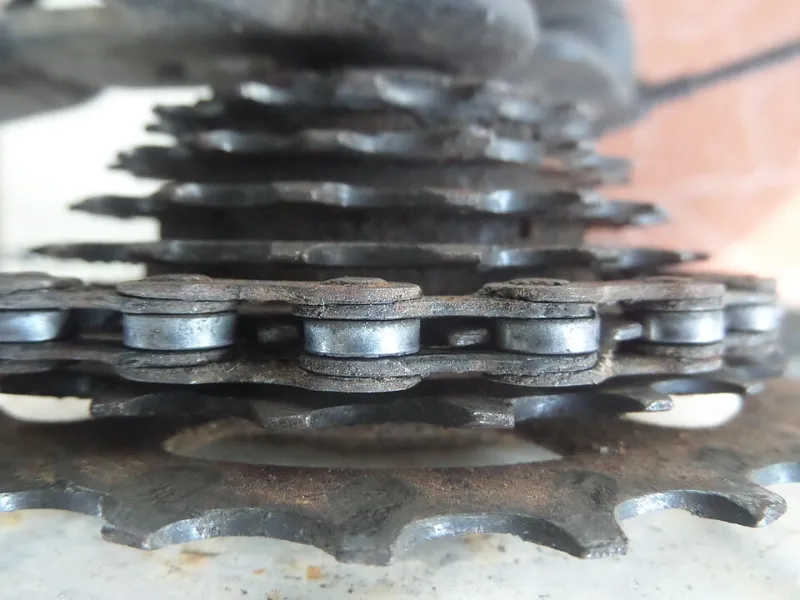
Photo: istolethetv, CC BY 2.0, via Wikimedia Commons
There’s a particular kind of optimism that comes from uploading a ride and seeing a fresh personal best pop up before you’ve even taken your shoes off. On a gyro bike, that optimism deserves a health warning. The flywheel that keeps you upright also changes how the bike accelerates, how it rolls, and — crucially — how your head unit and Strava interpret the ride. None of that makes the data useless. It just means you need to know which bits are solid and which bits are basically campfire stories.
The flywheel is doing more than keeping you upright
A gyroscopic stabilisation system adds mass, and mass changes the way a bike responds. It doesn’t just make the bike feel different in a car park; it affects acceleration, deceleration, rolling resistance and the way power is delivered to the road. On a normal bike, a sudden surge in effort translates fairly directly into speed. On a gyro bike, some of that effort is spent managing a heavier, more complex machine. The flywheel doesn’t care about your segment ambitions. It has its own relationship with momentum.
That matters because most ride data is inferred, not measured. Your GPS knows where you are and when. Your phone or head unit estimates speed from that. Strava then estimates power and calories from speed, elevation and your body weight. Add a motor-assisted or stabilised bike into that chain and the assumptions start to wobble.
Speed is real, but segment comparisons are not
GPS speed on a straight, open road is usually decent. The problem is the context. A gyro bike may hold a more consistent line through a corner, or feel steadier in a crosswind, which can flatter your average speed on a twisty loop. Equally, the extra weight can make a short climb or a punchy rise feel like a negotiation with a filing cabinet. Your speed data is real in the sense that you did travel that fast. Whether it’s comparable to your mate on a 7kg road bike is another question entirely.
Strava segments are particularly tricky. A segment is a fair test only if the conditions are fair. On a gyro bike, your usual benchmark rides may have been done with the stabilisation system on, off, or somewhere in between. That’s before we get to wind, traffic, surface and whether you were carrying a laptop, a lock or a week’s shopping. Treat segment leaderboards as a bit of fun. If you want to compare yourself, compare like with like: same bike, same setting, same route, same sort of day.
Heart rate is honest; calorie estimates are not
If you wear a chest strap or a reliable optical sensor, heart rate is one of the more trustworthy numbers you’ll get. It still needs interpretation — heat, caffeine and fatigue all have a say — but it reflects your actual physiological response rather than an algorithm’s guess. Cadence is similarly useful. If your cadence is steady and your heart rate is where you expect it, you’re probably working at the effort you think you are.
Calories are a different matter. Most calorie estimates are calculated from speed, elevation and body weight, with a bit of black-box adjustment thrown in. A heavier bike and a stabilisation system can change the energy cost of a ride without changing the speed profile in a way the algorithm recognises. You might burn more than the app says on a stop-start commute, or less than it says on a steady towpath pootle. Use calorie numbers as a rough shape, not a receipt.
Estimated power is entertainment, actual power is data
If your gyro bike has a real power meter — crank-based, pedal-based or hub-based — you’re in a much better place. Measured power is measured power. It tells you what you put through the pedals, regardless of what the flywheel is doing. The caveat is that the bike’s extra mass still affects acceleration, so the same power may produce different speed on different gradients and surfaces. But at least the number itself isn’t a guess.
Estimated power from Strava or a head unit is a different beast. It’s a modelled number based on speed, elevation and rider weight, and it has no idea you’re on a stabilised bike. On a gyro bike, it can be wildly optimistic on descents and flattering on flat sections where the bike carries momentum well. Treat it as a vibe, not a training truth. If you’re following a structured plan, use a real power meter or stick to heart rate and perceived effort.
Keep a ride ledger
The simplest way to make sense of gyro bike data is to write things down. Not a novel — just a few notes in the ride description or a private spreadsheet. Log whether the stabilisation was on, off or in a low-assist mode. Note the bike’s approximate weight, tyre pressure, load and any obvious wind. Add a one-word effort rating: easy, steady, hard, horrible. Over a few weeks, patterns emerge. You’ll see which routes flatter the bike, which ones expose the weight, and which numbers you can actually trust.
It also helps to create private segments for your regular loops. That way you’re not comparing your Tuesday commute to a stranger’s Sunday best. You’re comparing your own rides under your own conditions, which is the only fair test most of us have.
What to treat as entertainment
Calories, estimated power, relative effort and “suffer score” are all fine as motivational garnish. They are not training science. If you want to know whether you’re getting fitter, look at heart rate at a given perceived effort, cadence consistency, and how you feel on familiar climbs. On a gyro bike, the flywheel is a hidden passenger. It’s a brilliant one, but it doesn’t fill in the post-ride questionnaire.
Use the data to enjoy your riding, not to define it. A steady commute through a damp British morning is still a good ride even if Strava thinks you were drafting a lorry. And if a segment crown appears, enjoy it — just don’t let it go to your head. The flywheel knows the truth.