Four Grand, Two Kids and a Hill: The Real Case for Self-Balancing Cargo Bikes in the UK
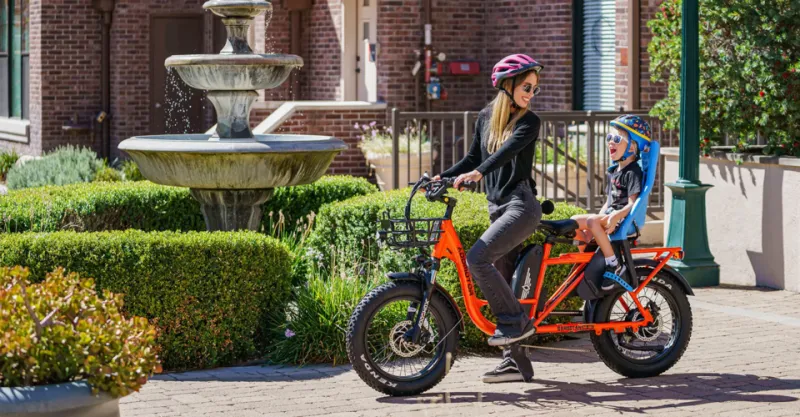
Photo: Addmotor Electric Bikes, CC0, via Wikimedia Commons
Cargo bikes have moved from niche delivery tool to genuine family runaround. Add a gyroscopic stabilisation system and you get a machine that can hold itself upright at a standstill, crawl through tight streets without a wobble, and make loading two kids and a week of shopping feel slightly less heroic. The catch? You are looking at around £4,000, sometimes more. So is a self-balancing cargo bike a sensible slice of family transport kit in 2026, or an expensive solution to a problem most parents can solve with practice and a decent kickstand?
What the gyro actually does
Let us be clear about the tech. A gyro-stabilised cargo bike uses spinning masses, sensors and a control system to counter the slow-speed tipping that makes heavy bikes feel tippy when you are creeping along. It is not a force field. It will not stop you sliding on wet tram tracks or save you from a driver who has not looked. What it does is reduce the low-speed wobble that makes a loaded cargo bike intimidating at school gates, in crowded cycle lanes and on steep cambered junctions.
That matters because cargo bikes are awkward. A longtail or box bike carries weight high and far from the steering axis. Add a child seat, a rucksack and a bag of potatoes, and the margin for error at walking pace shrinks fast. Gyro systems aim to give that margin back.
The £4,000 starting line
You can spend less. Conventional longtail cargo bikes start around £2,000 and go up to £4,000 or so. Gyro-assisted cargo models tend to sit above that, with £4,000 being a realistic entry point and £5,000 to £6,000 not unusual once you add lights, racks, child seats and weather protection.
Then there is upkeep. A standard longtail is a known quantity: chains, brake pads, cables, tyres. A gyro bike adds bearings, motors, sensors, software updates and a service network that is still thin in parts of the UK. If your nearest approved mechanic is 40 miles away, that is a real ownership cost, not a footnote. Battery health, firmware glitches and replacement stabiliser components are the sort of bills that do not show up on the showroom sticker.
Insurance quotes are worth getting before you fall in love. Cargo bikes are theft targets, and a £4,000-plus bike may exceed the limits on a standard home contents policy. Specialist cycle cover often costs more for cargo models, especially if you park outside overnight.
UK legal and insurance bits worth knowing
Most cargo bikes sold for family use are classed as electric pedal cycles, which means pedal assistance up to 250W and 15.5mph, no throttle-only power, and the usual rules around where you can ride. Length and width matter in the real world: some cycle lane barriers, towpath gates and train station storage are simply not built for a long cargo bike, gyro or not.
Insurance is not compulsory for riding a legal e-cargo bike on public roads, but third-party liability and theft cover are sensible. If you use the bike for business deliveries, even occasionally, tell your insurer. If you are only ferrying your own children, that is normally personal use, but check the small print. Some policies also ask about secure overnight storage. A heavy-duty ground anchor and a decent lock are part of the budget, not an optional extra.
Gyro cargo versus a conventional longtail
A conventional longtail wins on simplicity. It is lighter, cheaper, easier to service and more likely to fit on a standard bike rack or in a shed. If your routes are mostly flat, your children are old enough to sit still, and you are comfortable balancing a loaded bike at low speed, a longtail is the rational buy.
A gyro-stabilised cargo bike makes more sense if your riding is stop-start, hilly or crowded. School gates, narrow residential streets, busy junctions and slow filtering are where the stabilisation earns its keep. It also helps when you are loading children or shopping, because the bike is less likely to lurch while you are distracted. The trade-off is weight, complexity and cost. You are paying for assistance, not for a licence to switch off.
A practical buying checklist for parents
Test ride the bike loaded. Not with a salesman watching from the pavement, but with weight in the box or on the rear rack. Try a slow turn, a hill start and a stop on a cambered road. Ask how the stabilisation behaves when the battery is low, because that is when you need predictability.
Check the service network. Who fixes the gyro system in your area? What is the warranty on the stabiliser, the battery and the frame? Are spare parts available in the UK? Ask how software updates are handled and whether the bike needs a dealer visit for something as simple as a sensor fault.
Measure your storage. A cargo bike is long. It may not fit through a side gate, into a bike shed or onto a train. Think about where it will live overnight and whether you can charge it safely.
Price the whole package. Add child seats, rain covers, lights, locks, insurance and a helmet for every rider. Budget for tyres and brake pads, because a loaded cargo bike eats consumables faster than a solo commuter.
Finally, be honest about your routes. If your daily loop is a flat mile to school and back, a gyro cargo bike may be lovely but overkill. If you are replacing short car trips across a hilly town, with two kids and a weekly shop, the maths starts to look more interesting. Four thousand pounds is a lot, but so is running a second car. The right answer depends on your streets, your storage and your nerve at the school gate.
Gyro tech is not magic, and it is not cheap. But for some UK families, it is the difference between a cargo bike that gets used every day and one that sits under a tarpaulin because the low-speed wobble feels like hard work.