Foot Down or Feet Up? The Slow-Speed Turn That Separates Good Gyro Rides from Bad Ones
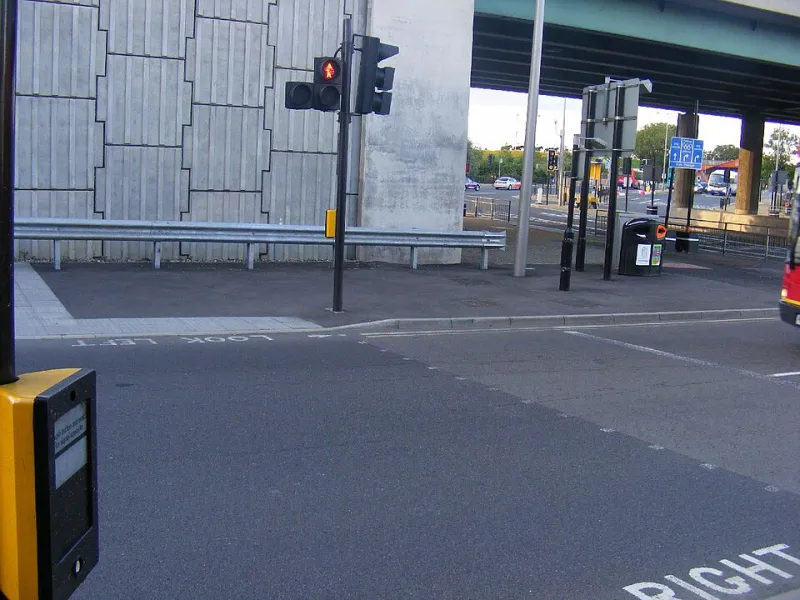
Photo: Sludge G, CC BY-SA 2.0, via Wikimedia Commons
Ask a gyro bike owner what they love about it and you'll usually hear about confidence, about not wobbling at the lights, about the school run feeling less like a juggling act. Ask them what still catches them out and the answer is rarely a big hill or a fast descent. It's the ordinary turn at the bottom of the road. The one you do ten times a week without thinking, on a bike without a flywheel.
British residential streets are built for exactly this kind of riding and almost nothing else. Cul-de-sacs, shared driveways, service roads behind the terraces, the little hammerhead turning circle at the end of a modern estate. They're low-speed, tight-radius and full of hazards that don't appear on any sportive route map: a bin day, a Deliveroo moped, a neighbour reversing off a dropped kerb.
The bit of the ride nobody films
A U-turn at walking pace is a strange thing to ask of any two-wheeler. You're leaned over, you're barely moving, your inside pedal is at the top of the stroke and you're trying to hold a line that's tighter than the bike's natural turning circle would like. Balance comes from a mix of steering geometry, a touch of momentum and a rider's ingrained sense of where the limit is.
A gyro bike changes the terms of that equation. The stabilising force isn't really about road speed at all — it's about how fast the flywheel is spinning. That's why you can feel remarkably planted at 3 mph in a car park, and why the sensation can dull slightly on a long, lazy descent where the system has less reason to intervene.
So far, so good. But a flywheel resists tipping; it doesn't steer for you. It won't tighten your line, it won't lift your inside pedal, and it certainly won't stop you clipping a wing mirror because you misjudged the radius.
Where the assist genuinely helps
Be fair to the technology. In day-to-day UK riding, low-speed stability is worth real money in a handful of moments:
- Waiting at a junction with a foot up. That slow, shuffling creep as you look both ways is where a stabilised bike feels most obviously different.
- The supermarket car park crawl. Loose surface, trolleys, a pedestrian who's spotted you late.
- Riding two abreast with a child. A wobbly young rider beside you is a lot easier to manage when your own bike isn't adding to the drama.
- Wet, mossy tarmac at 4 mph. British back streets in November are a traction experiment. Not having to fight for balance means more attention for the surface.
Where the weight argues back
Now the honest half. A gyro bike is heavier than the equivalent unassisted machine, and extra mass doesn't vanish because the flywheel is doing its thing. In a tight turn you're still hauling that weight around, and you'll notice it in three ways.
Hesitation. Riders new to a gyro bike often enter slow turns too slowly, waiting for the bike to feel wrong. It rarely does — but the hesitation itself is the problem, because a bicycle at 2 mph has almost no self-correcting momentum to fall back on.
Commitment. A tight turn needs a decision. Half-committing, straightening up mid-arc and then leaning again is how people end up putting a foot down, or worse, on the deck.
The pivot. If you do need to shuffle the bike round — three-point turn style, walking it backwards, wheeling it through a gateway — the flywheel is dead weight above your hands. Not unmanageable, but not something you'll do one-handed with a coffee.
The driveway problem
Dropped kerbs are a genuinely underrated hazard. You've got a camber change, often a bit of gravel, sometimes a slope, and a car parked in a way that suggests the owner has never considered a bicycle existing.
On a gyro bike, the trick is to treat the kerb as a separate event from the turn. Cross it straight, at a sensible angle, with the bike upright, then make your turn on the flat. Trying to lean and climb a dropped kerb at the same time is asking a lot of any bike, stabilised or not — and the flywheel can give you a false sense of security about exactly this sort of compound manoeuvre.
Three drills worth twenty minutes
Nothing here needs a track. A quiet cul-de-sac on a Sunday morning will do.
1. The figure of eight. Two circles roughly four metres across, joined in the middle. Keep the flywheel running, keep your inside pedal up, and see how slow you can go without a foot down. Repeat until it stops feeling like a party trick.
2. The full-width U-turn. Start close to one kerb, turn across the road width. On a narrow street, that's not a U-turn at all — it's a three-point turn, and you should practise it as one, checking behind before each movement. The stabiliser helps with the balance; it doesn't change the fact that you're manoeuvring in a live carriageway.
3. The stop-and-turn. Ride slowly, come to a controlled stop, then pull away into a turn. This is the realistic version of turning round outside a shop or at the school gate, and it's the one that catches people out.
What to pass on to the kids
Family riding is where this really matters. A child on a stabilised bike may find slow turns easier, which is great — but the skill they need to learn is still looking where they want to go, not where they don't. Teach the head turn first: look over your shoulder, look into the turn, then let the bike follow. The flywheel buys them confidence, not competence.
And be careful about the message. "The bike won't let you fall" is a sentence no child should hear about a moving vehicle. "The bike helps, and you're still in charge" is closer to the truth.
The takeaway
The cul-de-sac coda is this: gyroscopic stabilisation is a superb low-speed assistant and a poor substitute for handling. It gives you a longer window to make a good decision in, which in British residential traffic is worth a great deal. It won't make the decision for you.
So go and practise the turns you actually ride. Twenty minutes of figure eights will do more for your confidence than a month of reading spec sheets — and it'll show you exactly where the flywheel helps, and where it's simply along for the ride.