When 20 Is Plenty, What’s a Flywheel For?

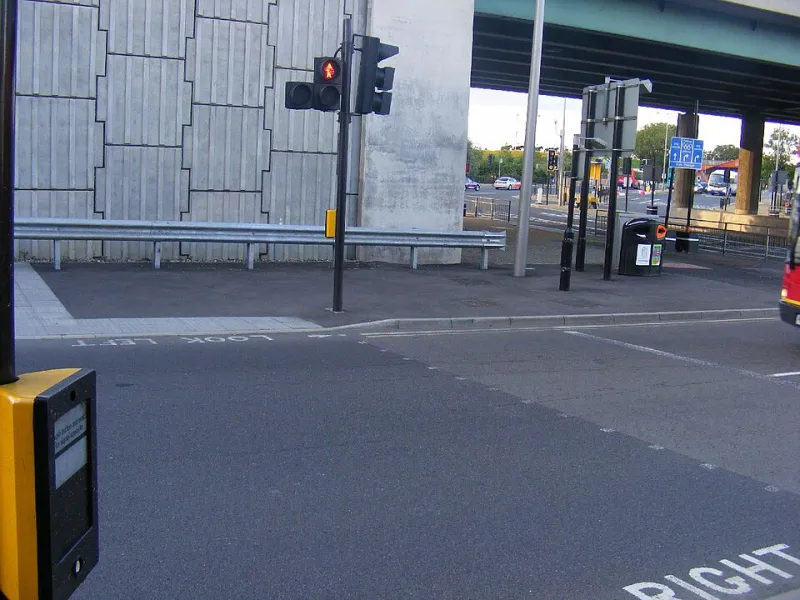
Photo: East Riding Archives, No restrictions, via Wikimedia Commons
There’s a quiet revolution happening on British streets, and it doesn’t involve a new bike lane or a fresh coat of paint. It’s the speed sign. More councils are switching residential roads to 20mph defaults, and school streets are popping up from Bristol to Bolton. For anyone weighing up a gyro bike, that shift deserves a closer look. If traffic is moving slower, does a spinning flywheel still make sense?
The 20mph shift isn’t just about cars
Let’s be clear about what lower speed limits do. They reduce the severity of collisions, give drivers more time to react, and make streets feel less like racetracks. Wales rolled out a national 20mph default on restricted roads back in 2023, and several English councils have followed with their own schemes. School streets go further, closing roads to motor traffic at pick-up and drop-off times.
For cyclists, the immediate win is psychological. A street where cars are capped at 20mph feels less hostile. But it also changes the dynamics of riding. At lower speeds, bicycles become inherently less stable — that’s physics, not a knock on your skills. The slower you go, the less gyroscopic effect your own wheels generate, and the more you rely on tiny steering corrections to stay upright.
Low-speed wobble: the case for a flywheel
This is where a gyro bike traditionally makes its pitch. A flywheel spinning inside the frame creates angular momentum that resists tipping, and that resistance is most noticeable when you’re crawling along. Think of the wobbly start from a junction, the slow filter through a queue of traffic, or the moment you ease off the pedals to check behind you.
On a 20mph street, you’re likely to spend more time at those lower speeds. You’re not chasing a gap in fast-moving traffic; you’re rolling with it. For riders who feel unsteady at walking pace — perhaps due to age, injury, or a condition that affects balance — that extra assistance can be genuinely useful. It’s not about going faster. It’s about feeling less likely to tip when everything around you is moving slowly.
Junction confidence and close passes
Junctions are where low-speed stability matters most. A slow turn across traffic, a cautious creep out of a side road, a trackstand-ish pause at a Give Way — these are the moments when a bike can feel twitchy. A gyro system can smooth those out, giving you a fraction more confidence to hold your line and make your decision.
Close passes are a different matter. A flywheel won’t stop a driver from squeezing past, but it can help you stay steady when they do. If you’ve ever been startled by a wing mirror brushing your elbow, you’ll know the instinct to flinch. That flinch can upset your balance. A stabilised bike doesn’t eliminate the flinch, but it can reduce the chance of it turning into a wobble.
Where the safety case moves from stability to reassurance
Here’s the nuance. At higher speeds, a gyro bike’s benefits are often framed as outright stability — keeping you upright when the road surface is poor or the weather turns. At 20mph, that argument shifts. The bike is already more stable because you’re not pushing it hard. The flywheel’s job becomes less about preventing a fall and more about reducing cognitive load.
That’s not a small thing. Riding in traffic demands constant attention: scanning for hazards, judging gaps, communicating with drivers. If a gyro system takes some of the balance burden off your brain, you’ve got more capacity for the stuff that really matters. Call it reassurance, call it mental bandwidth — either way, it’s a legitimate safety benefit.
But it’s also a benefit you pay for. Gyro bikes are heavier, more complex, and more expensive than a standard bicycle. If your main riding is on quiet 20mph streets and you’re confident at low speed, you might not need the extra help. The stabilisation argument isn’t weaker at 20mph — it’s just more conditional.
Practical takeaways for UK riders
If you’re weighing up a gyro bike against a conventional one, start with your route. Map out the streets you actually ride. Are they mostly 20mph residential roads, or do you mix in faster A-roads and rural lanes? The slower your typical speed, the more you’ll notice the flywheel at work — for better or worse.
Next, test ride at low speed. Don’t just whizz around a car park. Try a slow turn, a simulated junction pause, a gentle filter between parked cars. See how the bike feels when you’re barely moving. That’s where the stabilisation earns its crust.
Finally, be honest about your confidence. A gyro bike can be a brilliant tool for riders who feel vulnerable at low speed, whether that’s due to a disability, a long gap since their last ride, or simply the chaos of a school run. But it’s not a substitute for bike handling skills or road awareness. It’s an aid, not a magic carpet.
Lower speed limits are making UK streets calmer, and that’s good news for everyone on two wheels. For gyro bikes, the question is no longer whether stabilisation works — it’s whether you still need it when the traffic slows down. Sometimes the answer is yes, sometimes it’s no. The trick is knowing which one applies to you.