Pedals, Power and Permissions: Where Gyro Bikes Legally Fit on UK Roads and Paths
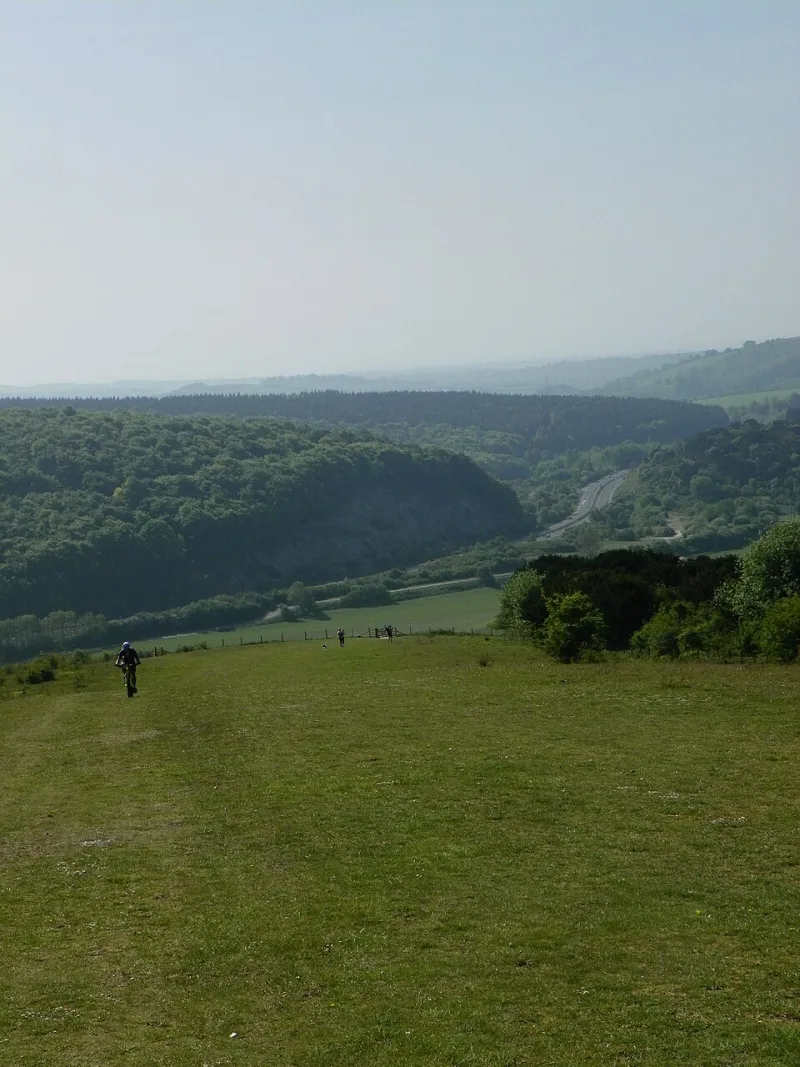
Photo: Martyn Pattison , CC BY-SA 2.0, via Wikimedia Commons
There's a moment every new gyro bike owner hits, usually about a week in. The balance thing is working, the wobble is gone, and you start wondering: can I take it down the towpath? Across the bridleway at the back of the estate? Onto the shared path by the retail park?
That's when the legal bit lands. And the honest answer is that gyroscopic stabilisation, clever as it is, doesn't have its own category in UK law. What decides where you can ride is the same set of rules that applies to every other electrically assisted pedal cycle on the road.
Let's unpick it.
First, the classification question
Under UK law, an Electrically Assisted Pedal Cycle (EAPC) has to tick a few boxes. The motor must be rated at no more than 250 watts. Assistance has to cut out at 15.5mph (25km/h). The bike needs functional pedals, and the motor can only help when you're pedalling — the exception being a walk-assist feature that nudges you along up to about 4mph.
Meet those requirements and your bike is treated as a bicycle. Full stop. No licence, no registration, no vehicle excise duty, no compulsory insurance. You can use it wherever pedal cycles go.
Now here's the thing people get wrong: a gyro flywheel, a stabiliser housing, a bit of extra weight in the frame — none of that changes your classification. The law isn't interested in how the bike stays upright. It's interested in the motor and the pedals.
What does change things is a machine that busts those limits. If it throws out more than 250 watts, or keeps assisting past 15.5mph, it's no longer an EAPC — it's a motor vehicle. At that point you're into licence, insurance, type approval and a very different conversation with your local constabulary. It also can't legally use cycle tracks. Worth checking the spec sheet before you buy, especially on imported models where the marketing copy and the certification don't always agree.
Why "it's safer" won't win the argument
Gyro riders often make a fair point: a bike that doesn't topple at a standstill is arguably less likely to end up under a bus. That's a reasonable safety case. It just isn't a legal one.
The law doesn't grade bikes on stability. A stabilised EAPC sits in exactly the same box as a wobbly old hybrid. And that cuts both ways — you get all the access rights of a bicycle, but you also get all the restrictions. No special dispensation for the flywheel, and no special exemption from the footpath ban either.
One useful side effect: because it's a cycle, not a self-balancing vehicle, it doesn't get dragged into the e-scooter mess. Those remain illegal on public roads outside the rental trial zones. A compliant gyro bike is on much firmer ground — as long as it stays compliant.
The plain-English access list
Assuming you've got a legal EAPC, here's roughly where you stand across England and Wales:
- Public roads — yes, obviously.
- Cycle lanes and cycle tracks — yes.
- Shared-use paths — yes, where they're signed for cycles. Look at the blue signs; a pedestrian-only symbol means no.
- Bridleways — yes. Cyclists have a right of way on bridleways, though you must give way to walkers and horse riders. Be realistic about low gates and narrow gaps; a heavier stabilised bike is not always the easiest thing to lift over a stile.
- Restricted byways and byways open to all traffic — yes.
- Public footpaths — no. That's a criminal offence in England and Wales, not a grey area.
- Canal towpaths — usually fine with a Canal & River Trust permit, but some stretches are closed to cycles. Check before you plan a route.
- Parks, promenades and seafronts — this is where local bylaws bite. Plenty of seaside towns ban cycling on the promenade in summer.
Scotland is different again. The Land Reform Act gives a broad right of responsible access, so the picture is generally more generous north of the border — but the same courtesy rules apply.
Local quirks that catch people out
Bylaws are the wildcard. A path can be perfectly legal one council over and off-limits the next. Royal Parks in London have their own rules. Some country parks and forest trails restrict cycling to waymarked routes. And barrier design — chicanes, kissing gates, A-frames — can quietly rule out a wider or heavier bike even where access is technically allowed.
If you're planning a regular route, spend ten minutes on the local council's rights-of-way map before your first ride. It'll save an awkward conversation with a warden.
What your employer may ask
Commuting by gyro bike raises a few workplace questions, and they're usually about paperwork rather than prejudice.
Cycle to Work scheme providers generally want confirmation that the bike qualifies as an EAPC. Some schemes are stricter than others about modified or unusually specified machines, so mention the stabilisation up front rather than after the paperwork. If you're charging a removable battery at your desk, expect a fire-safety policy to apply — many workplaces now insist on charging in a designated area. And if you're storing a heavier bike, check where it's actually allowed to live.
What insurers will ask
For home or cycle cover, the key question is almost always the same: is it an EAPC? Answer honestly, and describe any modifications. A stabiliser system fitted after purchase can affect a policy, particularly if it changes the value or the way the bike is used. If you want third-party liability cover — sensible for any commuter — check whether the policy covers electrically assisted cycles specifically, because not all of them do.
Your pre-ride checklist
- Motor rated at 250W or under, assistance cutting at 15.5mph
- Pedals fitted and working
- Route checked against the local rights-of-way map
- Towpath permit in place if you're using canal paths
- Bylaws checked for parks, promenades and country parks
- Insurance told about the bike, and about the stabiliser
- Employer briefed if you're using Cycle to Work or charging on site
None of this is glamorous. But knowing exactly where you stand means you can enjoy the ride — and argue your corner confidently if someone tells you a stabilised bike doesn't belong on the bridleway.